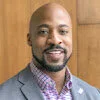
EP 21 Dr. Arwen Declan and Dr. Drew Birrenkott: SAEM Hackathon Special
Building Better Emergency Care Through Teamwork and Clinical Informatics
Guests: Arwen Declan, MD, PhD, and Drew Birrenkott, MD, DPhil | Released 04/02/26
Recorded before SAEM26, this episode previews the inaugural SAEM hackathon and explores a larger question: how do clinicians learn to build technology that fits emergency medicine? Dr. Arwen Declan and Dr. Drew Birrenkott join DJ and Ethan to discuss team-based problem solving, the realities of emergency department data, and the role of clinical expertise in shaping AI. Their planned workshop offers a concrete way into a field that can otherwise feel difficult to enter.
The organizers describe a process that starts before the competition itself. Educational webinars, access to a synthetic dataset, and expert mentorship were intended to help teams develop an initial solution. At the workshop, an unexpected change would test how well those solutions adapted. The exercise reflects a familiar feature of emergency medicine: the conditions under which a decision made sense can change quickly. Teams would need to explain what held up, what broke, and how they responded, as well as present their ideas.
Drs. Declan and Birrenkott emphasize that useful contributions extend beyond coding. Clinical informatics involves understanding a problem, the people affected by it, and the decisions a proposed system needs to support. Birrenkott describes his work at the intersection of engineering and emergency medicine as translation between disciplines. A data value that looks straightforward to an engineer may prompt a clinician to question how it was recorded. Bringing those perspectives together helps a team ask better questions before building a model.
The discussion turns to alert fatigue and the design of clinical decision support. Declan starts with the needs of the end user, while Birrenkott considers model performance and the consequences of repeated alarms. Both perspectives matter when a system is introduced into an already noisy department. The group also imagines electronic health records that make clinically useful information easier to find, reduce documentation burden, and preserve the parts of a note that communicate a physician's reasoning. These are goals and proposals discussed in the interview, with implementation still a central challenge.
Education raises its own tensions. Trainees need experience with tools they may use in practice, but they also need to develop the judgment to evaluate an answer. The guests discuss critical appraisal, changing competencies, and the distinction between assistance and unexamined reliance. Their examples include checking whether an AI-generated response answers the actual question, reviewing supporting literature, and keeping clinical reasoning visible when documentation becomes more automated.
The episode closes with the guests' own uses of AI, from coding assistance and knowledge discovery to editing manuscripts and testing ideas. Their experiences differ, including in how comfortably ambient documentation fits their clinical workflow. That variation reinforces the conversation's practical lesson: a tool's usefulness depends on the task and the person using it. The hackathon was designed to let participants explore those questions together, with room for beginners as well as experienced builders.
What we cover
• 🧩 The planned SAEM26 hackathon format and unexpected challenge
• 📊 What makes emergency department data difficult to interpret
• 🤝 Teamwork across clinical and technical backgrounds
• 🔔 Bringing user needs and model performance into alert design
• 🗂️ Finding useful information and reducing documentation burden
• 🎓 Teaching critical appraisal alongside new AI tools
• 🛠️ Practical uses of AI in research, coding, and everyday work
Resources discussed
• The Hackathon: Team-Based Innovation in Emergency Medicine, the official SAEM26 workshop listing for May 18, 2026. This event has passed.
• OpenEvidence, discussed as a clinical literature tool.
• Cursor, discussed for coding assistance.
• NotebookLM, discussed for knowledge discovery.
Connect with the guests
SAEM26 workshop and organizer listing